2026 Top Flag Pole For House Best Buying Guide?
Choosing the right Flag Pole For House requires more than comparing heights, prices, and polished product photos. A residential pole must suit the building, garden space, local weather, and the flag’s daily movement. A tall aluminum pole may look impressive beside a two-story home, yet it can feel oversized near a small porch. Ground sleeves, wall brackets, rope systems, finials, and tilt mechanisms also affect installation and maintenance.
Graham Bartram, Chief Vexillologist at the Flag Institute, has said, “A flag is more than cloth; it is a symbol of identity.” That idea matters when selecting a Flag Pole For House. The pole should display the flag clearly without overpowering the property. It should also protect the fabric from unnecessary rubbing, twisting, and prolonged moisture. Details matter.
This 2026 buying guide examines practical options for homeowners, including aluminum, fiberglass, and sectional poles. It considers wind resistance, corrosion protection, mounting stability, replacement parts, and installation effort. It also explains when a ground-mounted design works better than a wall-mounted model. Not every premium pole is the best choice. Some products look strong but use weak hardware. Others install quickly but become difficult to repair.
Real experience can expose those weaknesses. Still, no guide can remove every uncertainty. Soil, exposure, and homeowner skill vary widely. Measure carefully. Check the fittings twice. A slightly imperfect choice may remain serviceable, but a poorly secured pole can become a costly problem.
Types of House Flag Poles and Their Main Differences
2026 Top Flag Pole For House Best Buying Guide?
Types of House Flag Poles and Their Main Differences
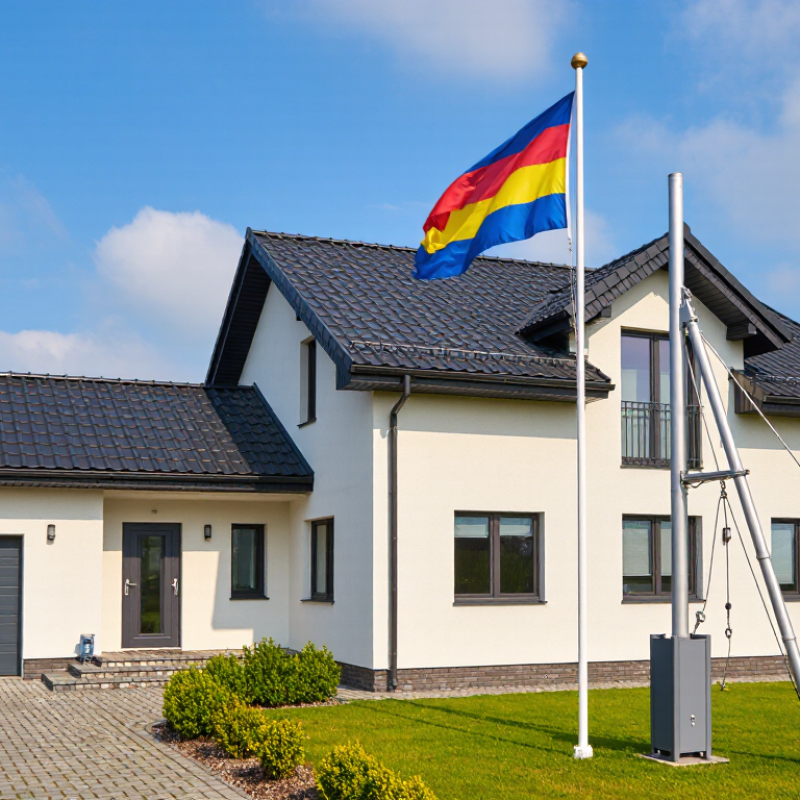
Choosing a house flag pole starts with the mounting location, not the flag design. Wall-mounted poles attach beside a door, window, or porch post. They suit small yards and homes with limited soil access. Their brackets usually need solid wood, masonry, or reinforced siding. Lightweight aluminum reduces wall stress, while steel offers greater rigidity. Check the fasteners after heavy rain. Small movement can become a serious lean.
In-ground poles create a stronger visual statement and support larger flags. A buried sleeve holds the shaft, but installation requires careful depth and drainage. Poorly compacted soil may let the pole tilt during storms. Telescoping poles collapse into shorter sections, making storage and flag changes easier. However, their joints need regular inspection. A loose collar can cause rattling. Choose carefully.
Rotating house poles help flags turn with changing wind, reducing fabric wrapping. Fixed poles are simpler, but the flag may twist around the shaft. Decorative poles often include finials and curved arms, adding character near entrances. They may sacrifice some wind performance for appearance. Measure the flag, pole height, clearance, and expected wind exposure together. A taller pole is not always better. Local installation rules and neighborhood requirements should also be checked before drilling or digging.
How to Select the Right Flag Pole Size and Material
2026 Top Flag Pole For House Best Buying Guide
How to Select the Right Flag Pole Size and Material
Choosing a residential flag pole starts with the house, not the flag. A 20 to 25-foot pole usually suits a single-story home. Taller homes may need 25 to 30 feet for balanced visibility. Measure from the planned base to the roofline. The flag should look proportional, not oversized. Check local setback rules before digging. Some communities require distance from sidewalks, property lines, or overhead wires.
Material affects weight, movement, and maintenance. Aluminum is lightweight and resists rust, making it practical for many yards. Fiberglass flexes during strong winds and can reduce sudden stress on the pole. Steel offers impressive strength, but it needs a reliable protective finish. Scratches can become rust points. I once chose a pole that looked sturdy, but its base felt too narrow for the open yard. That mistake made the flag sway more than expected.
Pay attention to wall thickness, hinge quality, ground sleeve depth, and the stated wind rating. A larger flag creates more wind load, even on a shorter pole. For many homes, a 3-by-5-foot flag is easier to manage than a larger one. Inspect fittings each season, especially after storms. I prefer a removable ground sleeve because repairs become simpler. Still, installation details matter more than appearance. Poorly compacted soil can undermine a good pole.
2026 Top Flag Pole for House Buying Guide
How to Select the Right Flag Pole Size and Material
For most homes, a 20–25 ft flag pole provides good visibility without overwhelming the property.
The recommended flag length generally increases with pole height, while aluminum is a popular choice
because it is lightweight and resistant to rust. Fiberglass offers low maintenance and flexibility,
while steel is stronger but heavier and requires better corrosion protection.
Installation, Stability, and Maintenance Considerations
2026 Top Flag Pole for House: Best Buying Guide
Installation, Stability, and Maintenance Considerations
A residential flag pole should match the house, soil, and local wind exposure. The tallest option is not always the safest choice. Measure the available yard space before buying. Keep the pole away from roof edges, power lines, sprinklers, and tree branches. Check local property rules and underground utility maps. A professional survey may prevent an expensive mistake.
Follow the pole’s engineering instructions for footing depth and concrete volume. In cold regions, the footing usually needs to extend below the frost line. The base should remain perfectly vertical while the concrete cures. Use a level from several directions. Wind changes everything. A 20-foot pole can create strong leverage at its foundation, especially with a wet flag. Choose corrosion-resistant hardware and a strong halyard system for exposed locations.
Maintenance is simple but cannot be ignored. Inspect the rope, pulley, fasteners, and base at least twice yearly. Look for frayed fibers, loose bolts, rust stains, and movement after storms. Wash the pole with mild soap and clean water. Avoid harsh chemicals that can damage protective finishes. My own early mistake was checking only the visible shaft. The hidden anchor bolts were loosening. That detail mattered. Replace damaged flags promptly, because torn fabric can whip against the pole and increase wear. Lower the flag during severe weather when practical and permitted.
Best Buying Criteria for a House Flag Pole in 2026
2026 Top Flag Pole For House Best Buying Guide?
The best buying criteria begin with wind, not appearance. ASCE 7-22 provides regional wind-speed maps for structural design. Check your local exposure and risk category before selecting height or material. A tall pole can look elegant, yet it creates greater leverage during storms. For many homes, a 20- to 25-foot pole offers visible display without excessive structural demand. Still, that range is not universal.
Choose corrosion-resistant aluminum or properly treated steel, depending on soil, moisture, and maintenance habits. Examine the wall thickness, finish, pulley system, rope, cleat, and truck assembly. These small parts often fail before the shaft.
A professional installation should follow the manufacturer’s foundation dimensions and local residential-code requirements, including the 2024 International Residential Code where adopted. Concrete depth matters. So does drainage.
Review the stated wind rating, but do not treat one number as a guarantee. Ratings may assume specific installation methods, flag sizes, and exposure conditions. The National Oceanic and Atmospheric Administration’s storm data shows why regional weather history deserves attention, especially in coastal and high-wind areas. Measure your yard first. Keep the flag clear of roof edges, utility lines, and tree branches. I prefer a slightly shorter, well-anchored pole over an impressive pole with an undersized footing. That choice is less dramatic, but more reliable. I still find appearance tempting; it should not outrank engineering.