How to Choose the Best Flag Stand for Your Outdoor Events and Activities
Choosing the right flag stand for outdoor events and activities is crucial for ensuring visibility and stability in varying weather conditions. According to a recent report by the Outdoor Advertising Association, a well-placed flag can increase brand awareness by up to 30%, making flag stands an essential investment for businesses and event organizers. However, with a multitude of options available in the market, selecting a robust and suitable flag stand can be a challenging task.
Industry expert, Sarah Johnson, a leading figure in outdoor marketing solutions, emphasizes the importance of quality, stating, "A reliable flag stand can make the difference between conveying your message effectively or letting it fall flat in the wind." In light of these insights, it becomes evident that understanding the features and functionalities of different flag stands is paramount for achieving desired outcomes at outdoor gatherings. This guide will delve into key considerations to help you choose the best flag stand tailored to your specific needs, ensuring that your flags not only stand tall but also create a lasting impression.
Types of Flag Stands for Different Outdoor Conditions
When planning outdoor events and activities, selecting the right flag stand is crucial to ensure visibility and stability under various conditions. Different types of flag stands are designed to cater to specific environmental factors. According to a report by the Outdoor Advertising Association, approximately 75% of consumers can recall the branding displayed on flags at events, showing the importance of effective flag visibility.
For windy locations, portable flag stands equipped with weighted bases or ground spikes are essential. These designs help to secure the flag in place, preventing it from tipping over or becoming damaged. For example, a study from the International Association of Venue Managers indicates that flags in high-traffic outdoor areas benefit significantly from stands that can sustain gusts of up to 30 mph without compromising their display. Such durability is particularly valuable during events like festivals or sporting activities where gusty winds can be prevalent.
On the other hand, in calm weather conditions, lightweight flag stands provide great versatility, allowing for easy transport and setup. Many event organizers prefer telescoping flag stands that can adjust in height, reaching between 6 to 15 feet, depending on the visibility requirements. This adaptability not only accommodates various outdoor settings but also enhances brand exposure. The versatility factor allows brands to maximize their visibility regardless of the venue's layout or weather conditions, ultimately contributing to a successful outdoor event.
How to Choose the Best Flag Stand for Your Outdoor Events
This chart illustrates the most suitable types of flag stands for various outdoor conditions based on their popularity and effectiveness.
Key Features to Consider in a Flag Stand
When selecting a flag stand for outdoor events and activities, several key features should be considered to ensure durability and effectiveness. First and foremost, the material of the flag stand plays a critical role in its performance. Look for stands made from robust materials such as aluminum or heavy-duty plastic, which can withstand harsh weather conditions. Furthermore, check for features like corrosion resistance and UV protection, particularly if the stand will be exposed to sunlight and moisture regularly. This will ensure longevity, reducing the need for frequent replacements.
Another critical aspect is the weight and stability of the stand. A heavy base is essential for windy conditions, as it prevents the flag from tipping over or being blown away. Look for stands that offer additional options for added weight, such as the ability to fill a base with sand or water. Additionally, consider the ease of setup and portability. A flag stand that is lightweight and easy to assemble can make a significant difference, especially for events where quick installation is necessary. Understanding these features will help you choose a flag stand that meets your needs while ensuring your flags remain prominently displayed throughout your outdoor events.
Factors Affecting Stability and Durability of Flag Stands
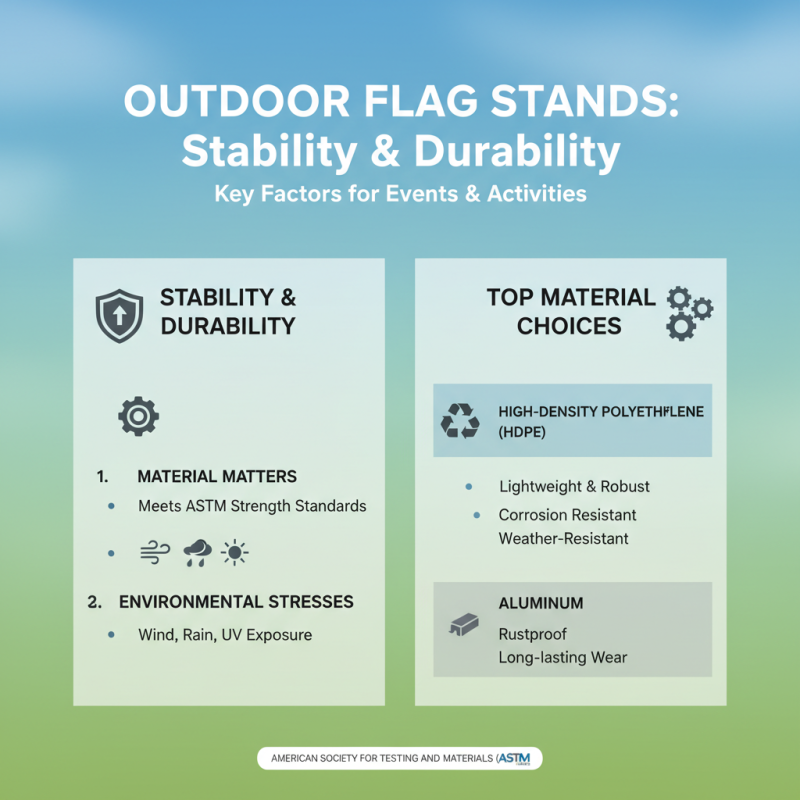
When selecting the best flag stand for outdoor events and activities, understanding the factors that affect stability and durability is crucial. One primary consideration is the material from which the flag stand is constructed. According to the American Society for Testing and Materials (ASTM), materials must meet specific strength standards to withstand environmental stresses such as wind, rain, and UV exposure. For instance, high-density polyethylene (HDPE) and aluminum are popular choices due to their lightweight yet robust nature, offering excellent resistance to corrosion and wear over time.
Another critical aspect is the base design of the flag stand. A study by the International Journal of Wind Engineering indicates that flag stands with wider bases show significantly improved stability during high wind conditions compared to narrower designs. Utilizing a heavy-duty, weighted base or the option to fill the base with sand or water can enhance stability, making the stand more secure during outdoor events, especially in exposed areas. Furthermore, the height and flexibility of the flagpole must be considered; invest in materials that provide structural integrity while allowing some degree of flex to prevent breakage under wind stress. By carefully evaluating these factors, you can ensure that your flag stand will be a durable and reliable presence at any outdoor gathering.
Comparing Materials Used in Flag Stand Construction
When selecting the best flag stand for outdoor events, understanding the materials used in its construction is crucial for ensuring durability and stability. Common materials for flag stands include aluminum, steel, and plastic, each offering distinct advantages. Aluminum stands are lightweight and rust-resistant, making them ideal for portability and use in various weather conditions. Their anodized finish often provides added protection against the elements, which is beneficial for events that last multiple days.
On the other hand, steel stands are known for their robustness and strength. They are typically favored for larger flags or harsher environments where wind resistance is a concern. Steel's durability ensures that the flag remains stable even in windy conditions, although it does require some treatment or paint to prevent rust if used outdoors frequently. Conversely, plastic stands are favored for their affordability and lightweight properties, but they may not be as durable or stable as their metal counterparts, especially under challenging weather conditions. Understanding the pros and cons of each material can help you make an informed choice tailored to the specific needs of your outdoor events.
How to Choose the Best Flag Stand for Your Outdoor Events and Activities - Comparing Materials Used in Flag Stand Construction
| Material |
Durability |
Weight |
Portability |
Cost |
Best Use |
| Aluminum |
High |
Lightweight |
Very portable |
Medium |
Outdoor events |
| Steel |
Very High |
Heavy |
Less portable |
High |
Permanent installations |
| Plastic |
Medium |
Lightweight |
Very portable |
Low |
Temporary setups |
| Fiberglass |
High |
Lightweight |
Portable |
Medium |
Various outdoor events |
| Wood |
Medium |
Heavy |
Less portable |
High |
Decorative uses |
Understanding Weight Options for Enhanced Support in Various Settings
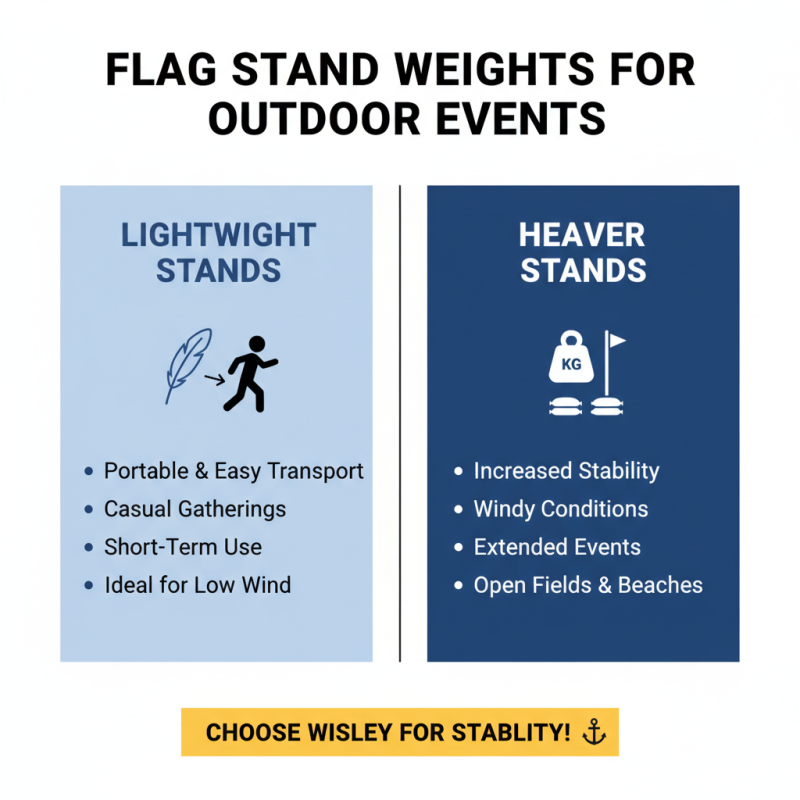
When selecting a flag stand for outdoor events, understanding the weight options available is crucial for ensuring stability in various conditions. Lightweight stands are often portable and easy to transport, making them ideal for casual gatherings and short-term use. However, during windy conditions or for extended events, a heavier stand is typically more effective. Consider locations where the flag will be displayed, such as open fields or beach settings, which may require additional weight to prevent the stand from tipping over or being blown away.
There are several weight options to enhance support, including water, sand, and concrete bases. Water bases are adjustable in weight and convenient for transportation but may not provide sufficient stability in strong winds. Sandbags, on the other hand, offer a good balance of portability and stability but require manual setup. Concrete options, while heavier and more difficult to transport, offer superior support and are less likely to shift in adverse conditions. When choosing a flag stand, assessing the environment and your specific needs will help you select the optimal weight support system for your outdoor activities.